Road Trip 2015
by Eric, Nicoline, Frank, Mark, Jenny
by Eric, Nicoline, Frank, Mark, Jenny
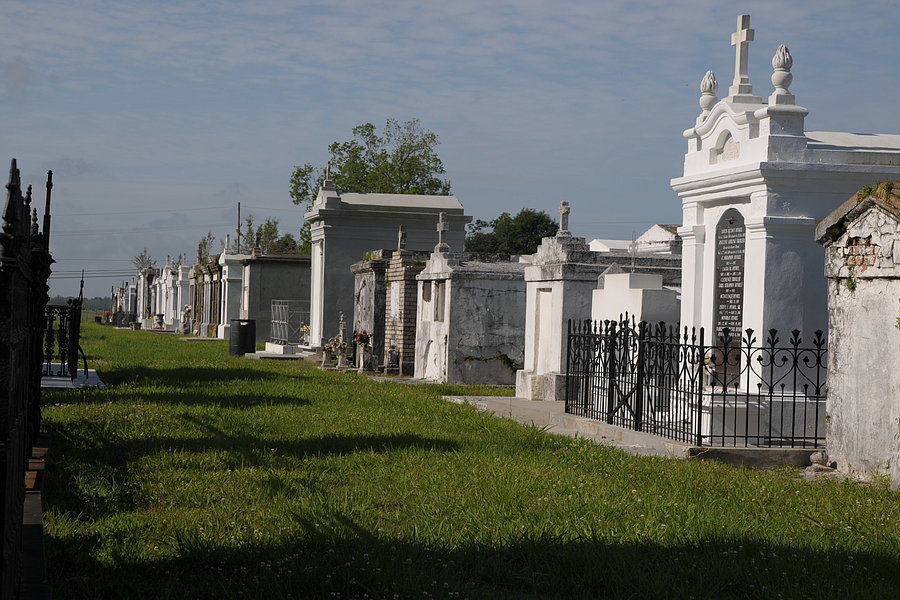
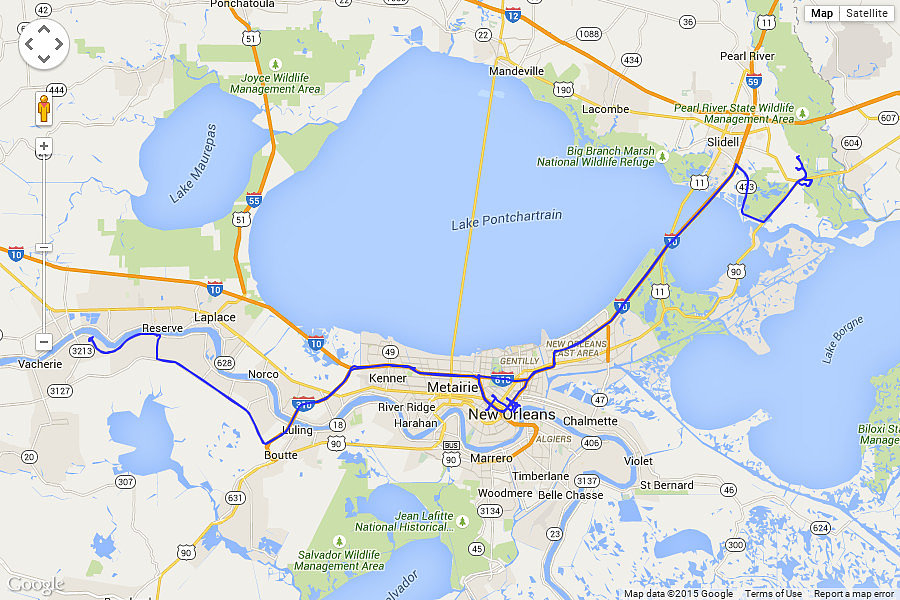
While Frank, Mark and Jenny sleep in, Eric and Nicoline get up at seven and go out to the Whitney Plantation, which has been turned into a plantation and slavery museum. Because they’re so early, they stop at a Denny’s for a proper breakfast, visit a graveyard, where, incidentally, General P.G.T. Beauregard is buried, then still manage to get there 20 minutes before the start of the tour.
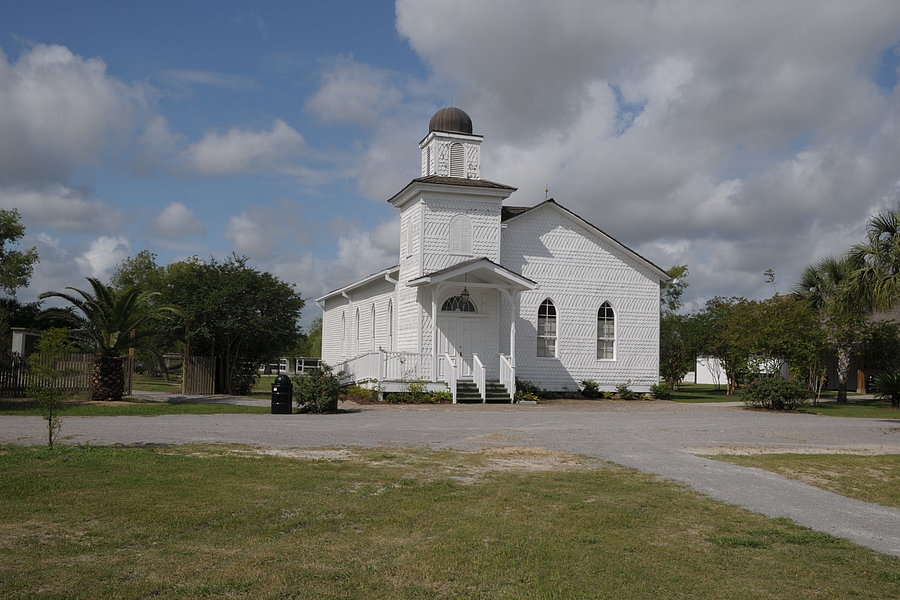
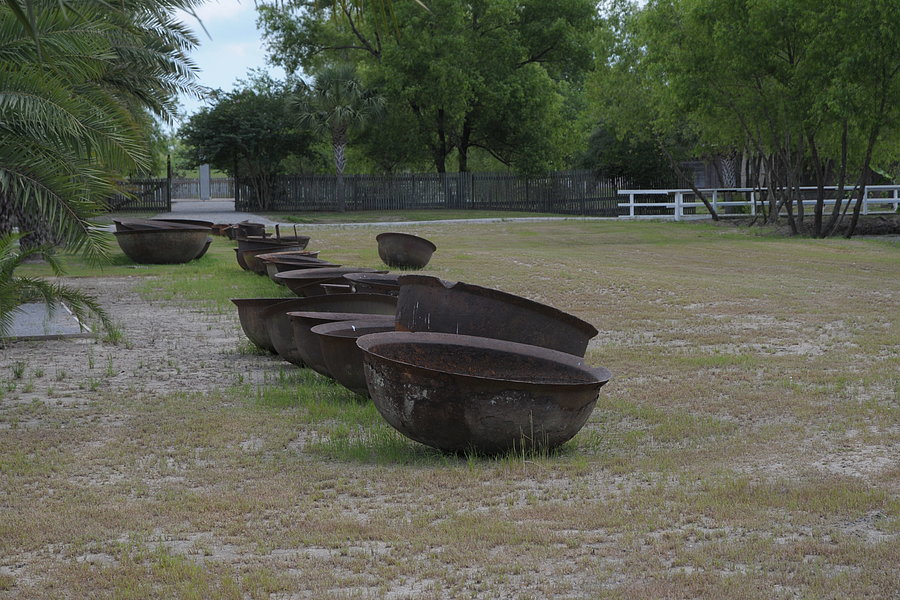
Whitney Plantation is a slavery museum that emphasizes the fate of slave children. As part of the Works Progress Administration writers’ project, former slaves were interviewed in the 1930s. Most of these former slaves had of course been children when the Civil War ended and slavery was abolished in 1865. Their stories and experiences form the basis for the exhibits and tours at Whitney.
The children are represented through bronze life-size statues in the church, representing the individual child slaves from the oral history project. Each visitor gets a lanyard with a picture of one of the statues on one side and an excerpt of the child’s story on the other side. Visitors are encouraged to find “their” child among the statues.
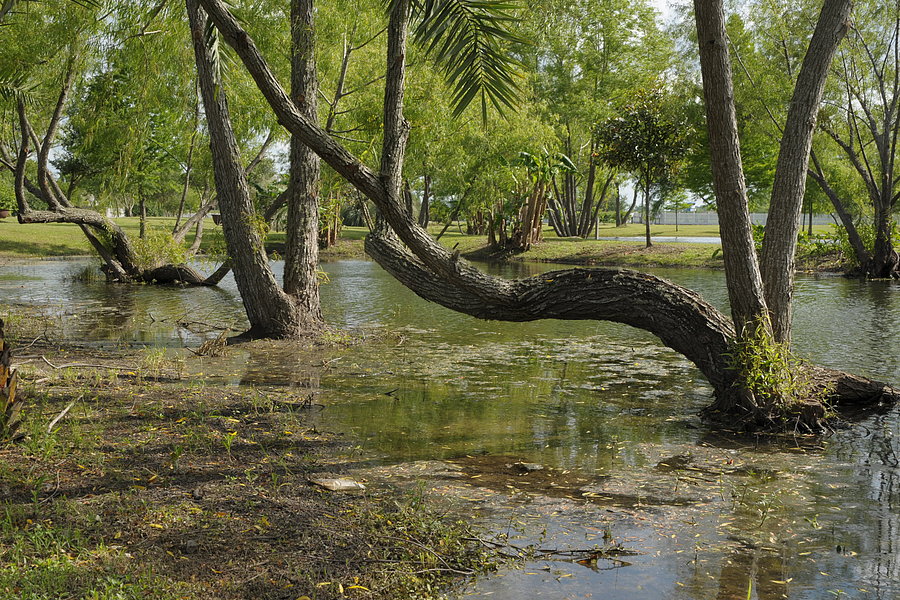
However, one of the more harrowing displays is formed by two bronze heads on stakes in the swamp next to the parking lot. These heads are a reminder of the habit of displaying the heads of recaptured slaves on stakes along the road.
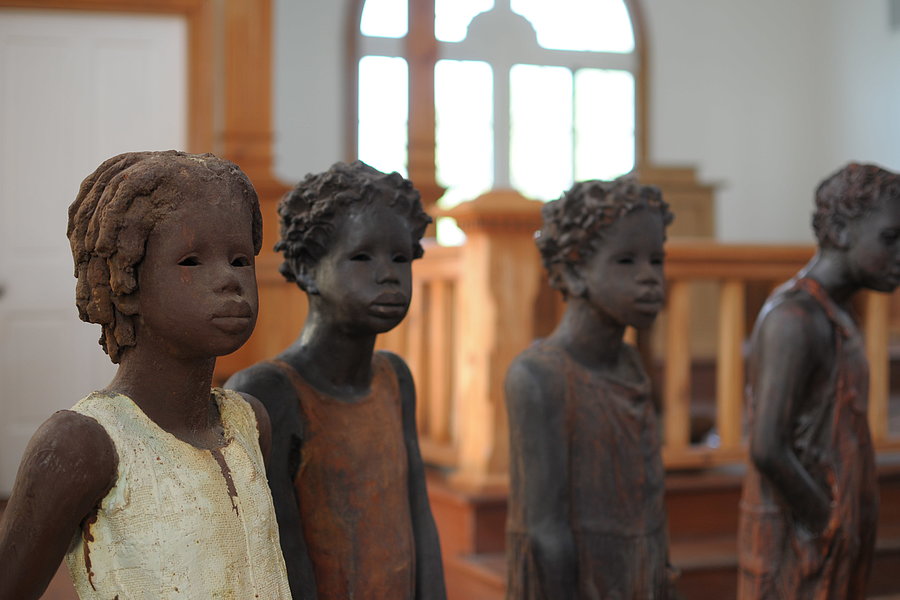
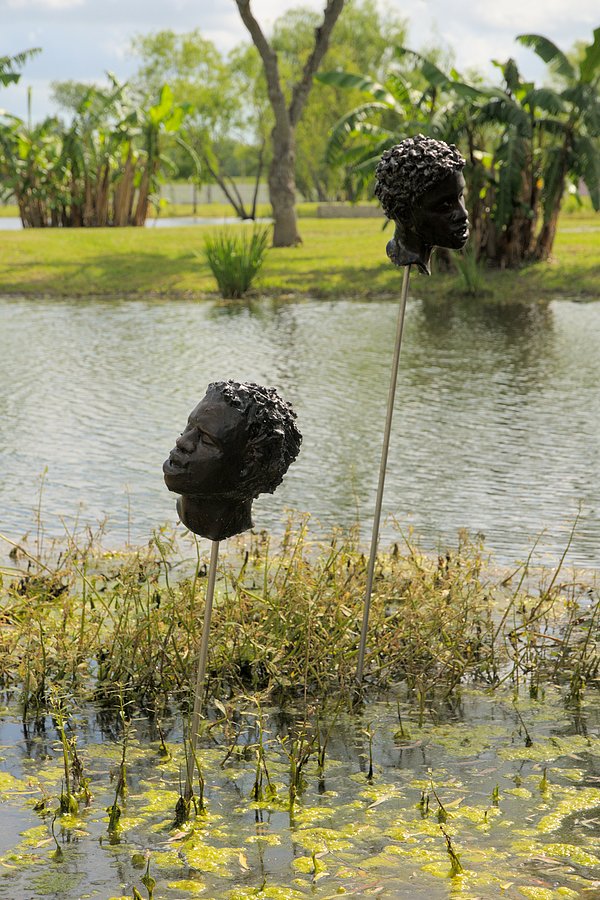
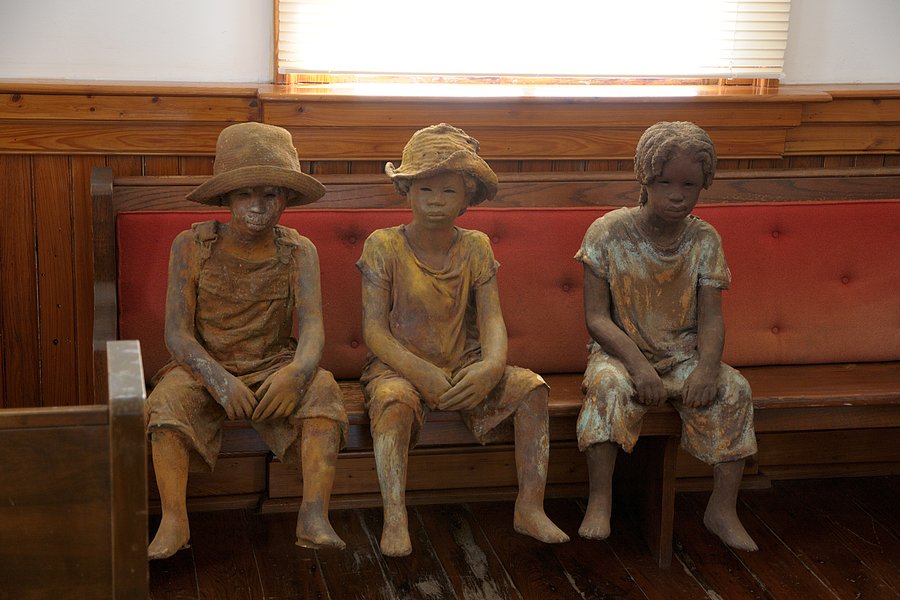
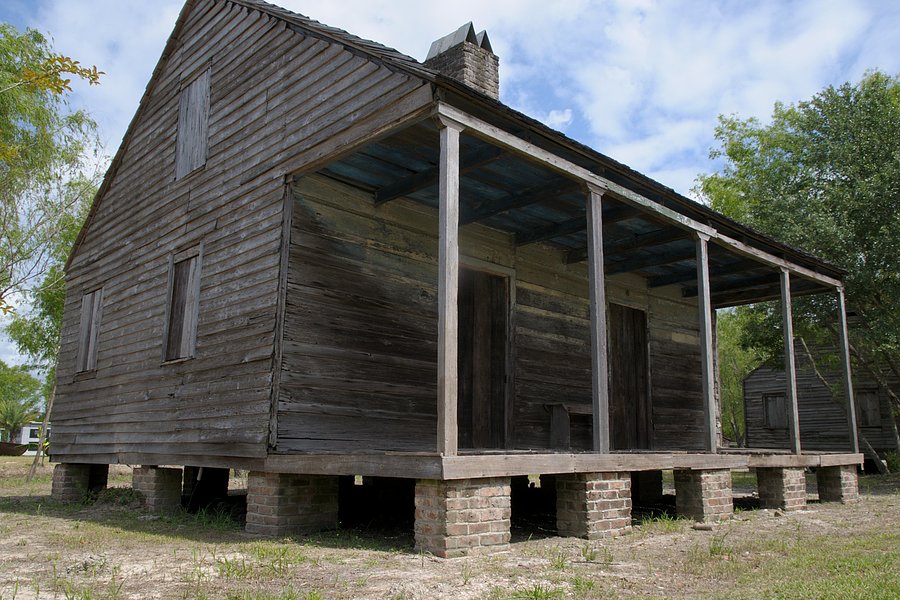
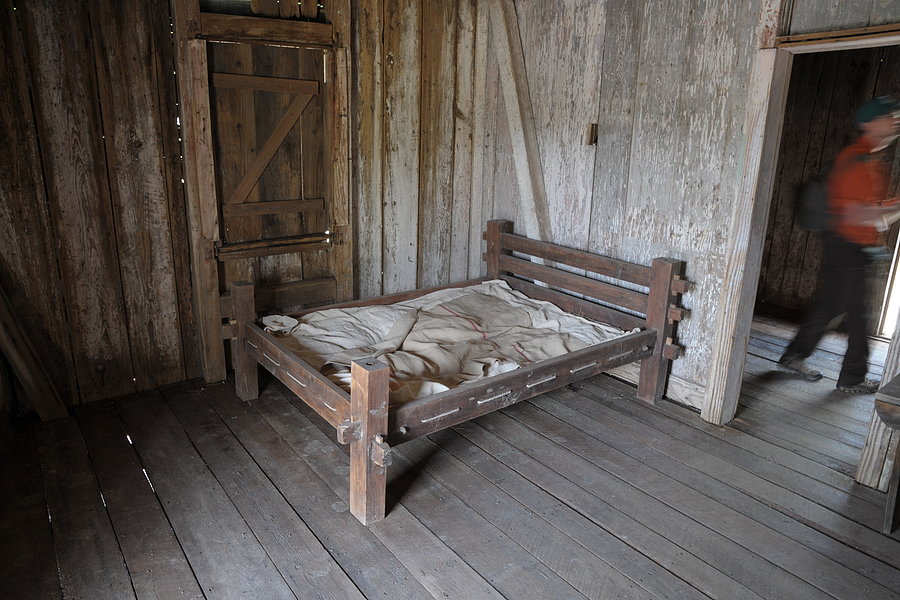
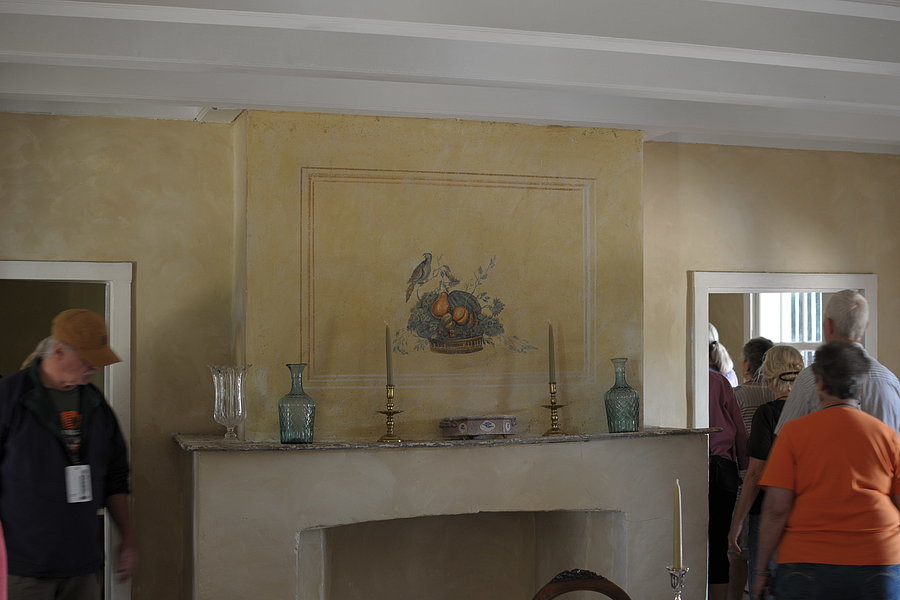
The tour ends at the main house where the white owners lived. The Haydels bought the land in the 1750s and lived there until they sold it after the Civil War. Besides the child statues, there are a number of other impressive slavery memorials on the site.
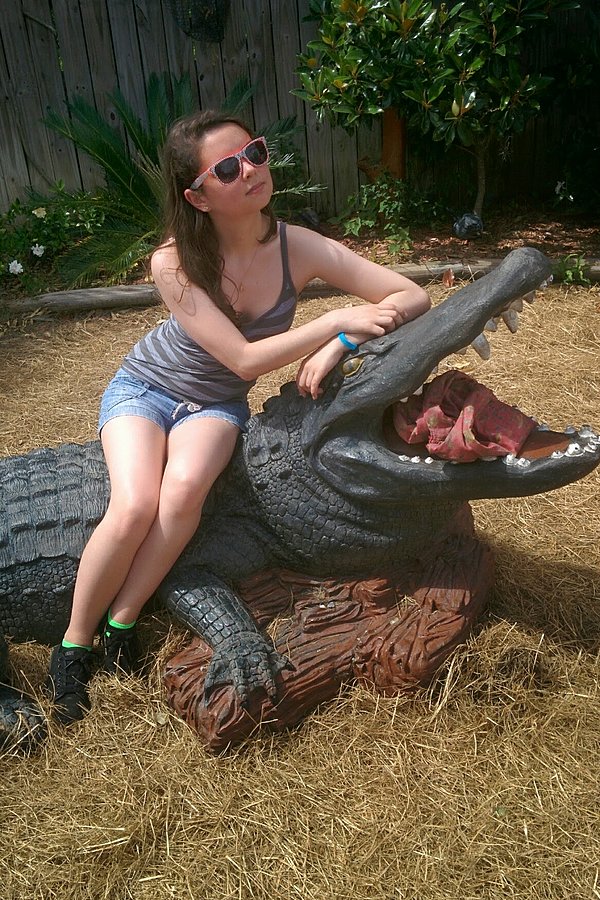
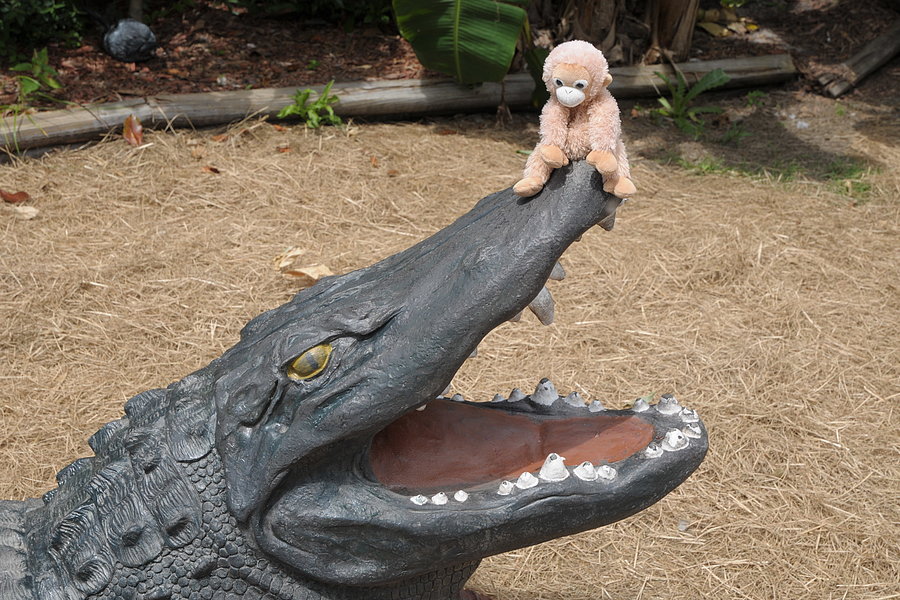
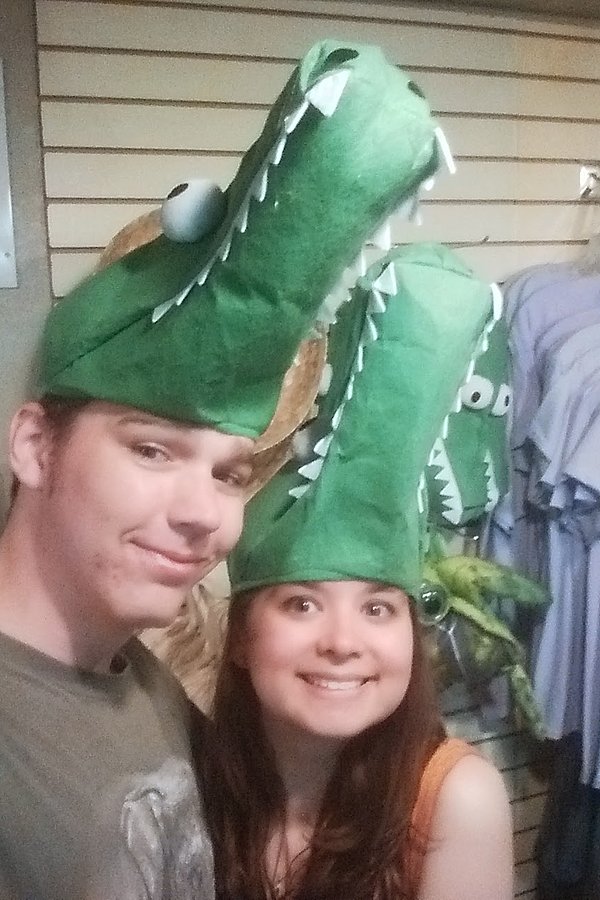
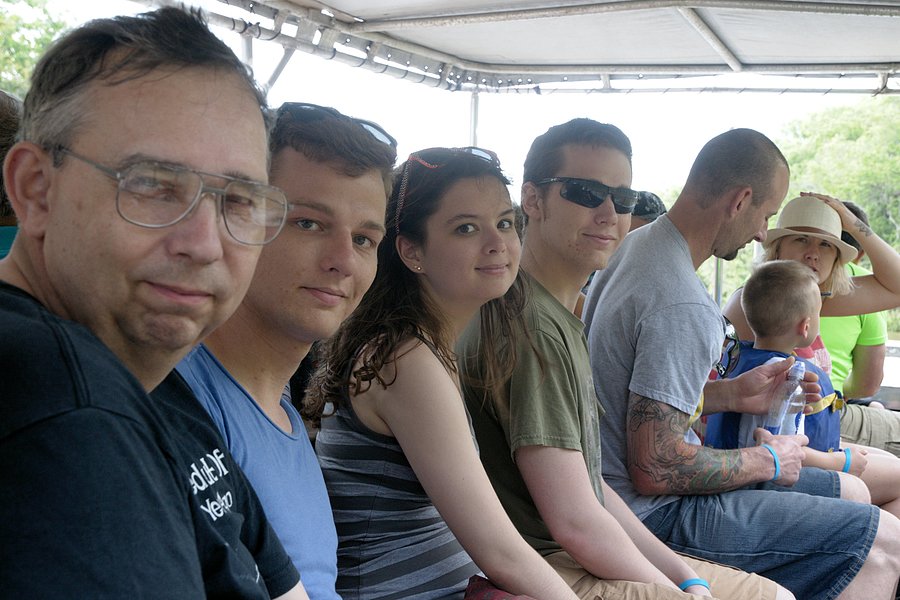
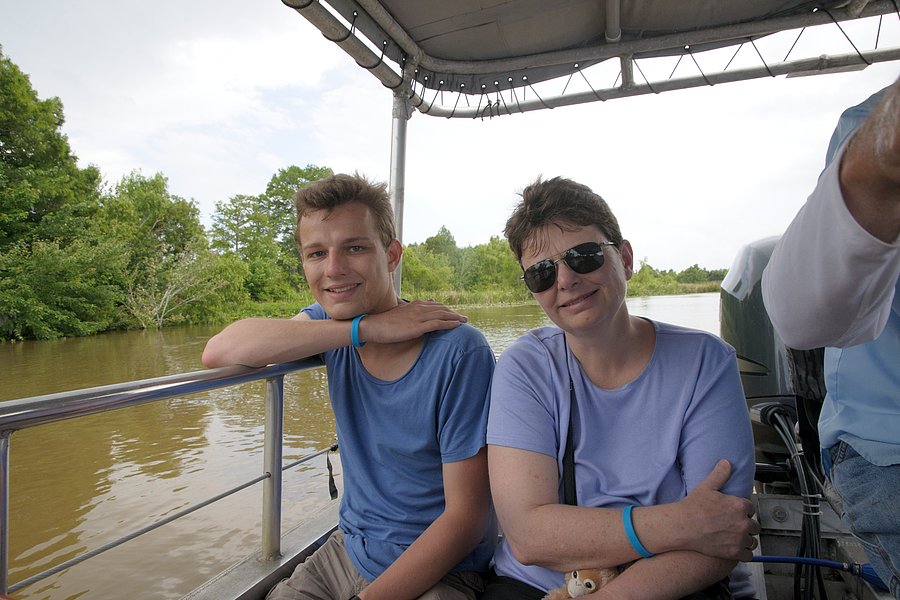
Eric and Nicoline pick up the kids shortly after one and we all head out to Honey Island, where we have booked a swamp tour with Cajun Encounters. This tour is billed as an eco-friendly swamp tour, which attracted us to it. We were asked to be there half an hour early, which we were, but the tour starts half an hour late. During the wait, both Jenny and Marching Monkey posed with the concrete alligator; Mark and Jenny tried on silly alligator hats.
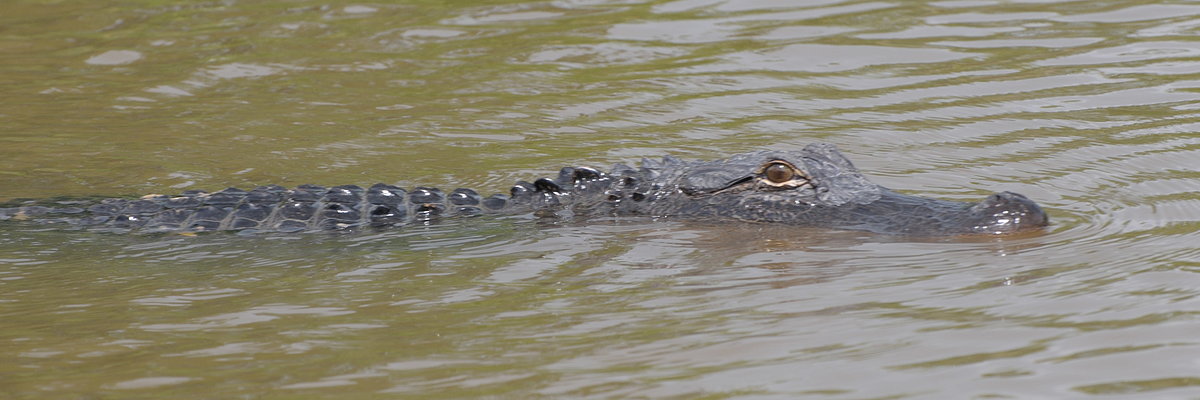
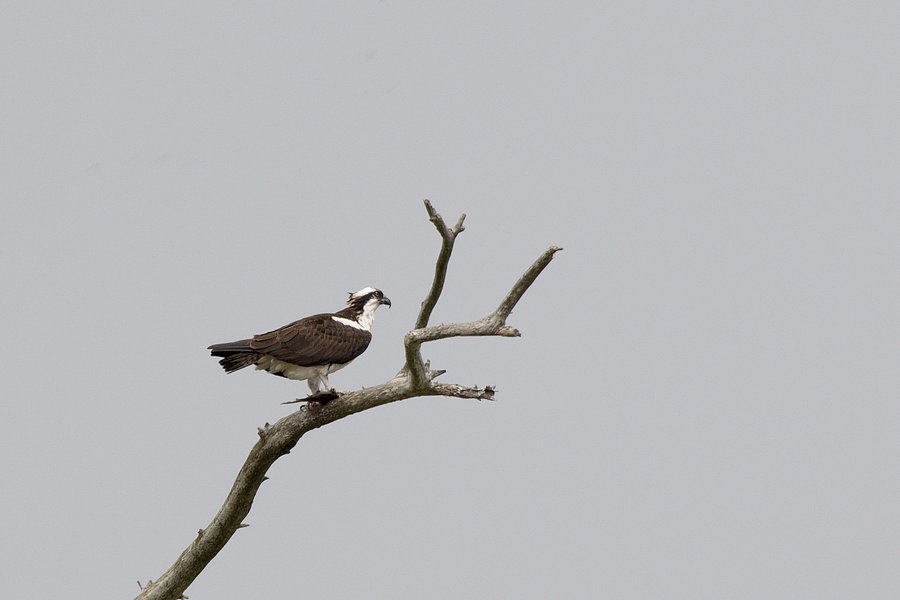
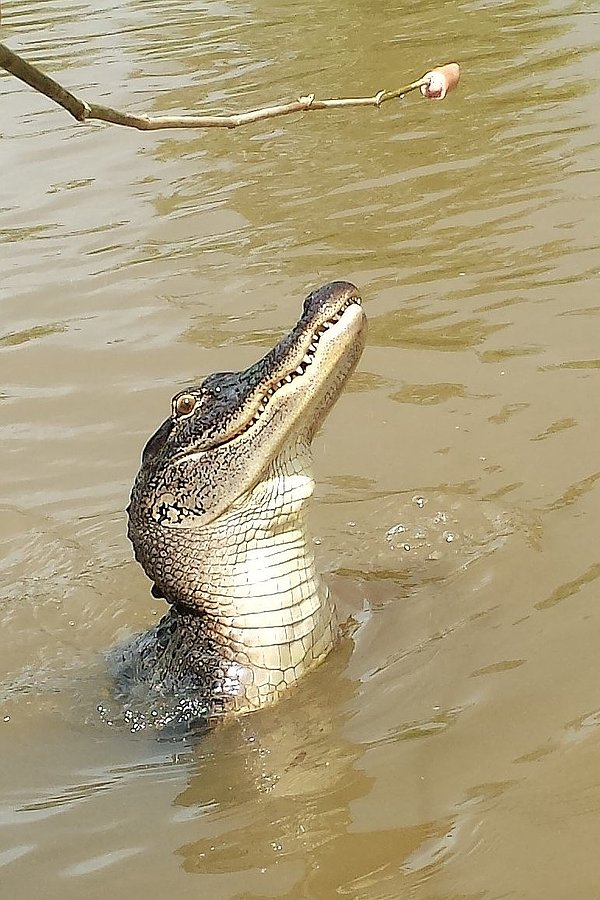
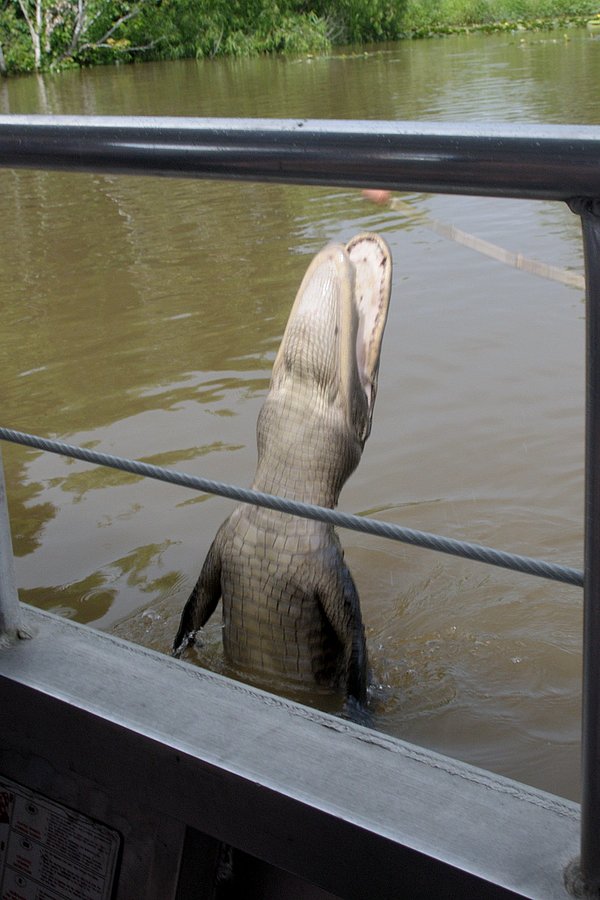
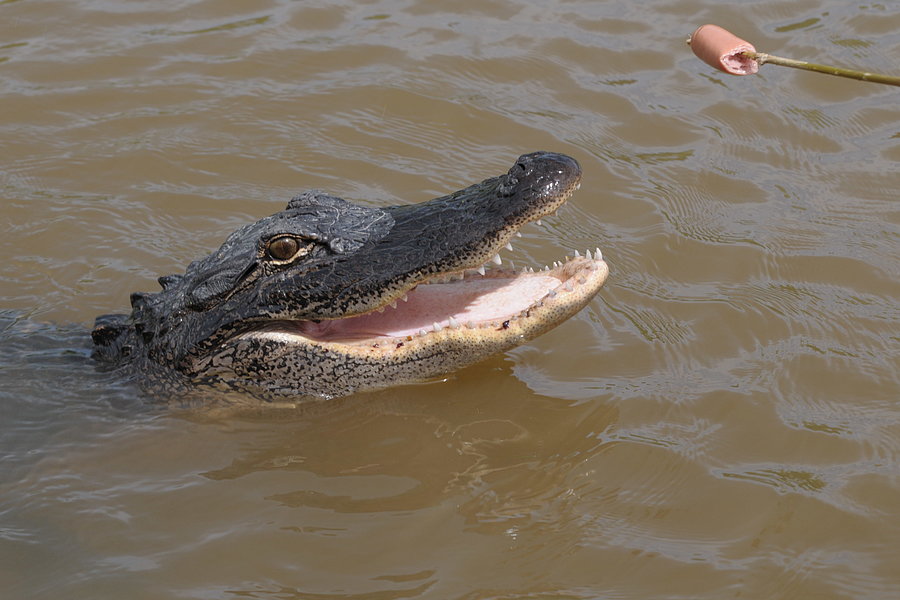
Once the tour gets under way, though, it is worth the wait. We do get to see alligators up close, as well as an osprey and turtles.
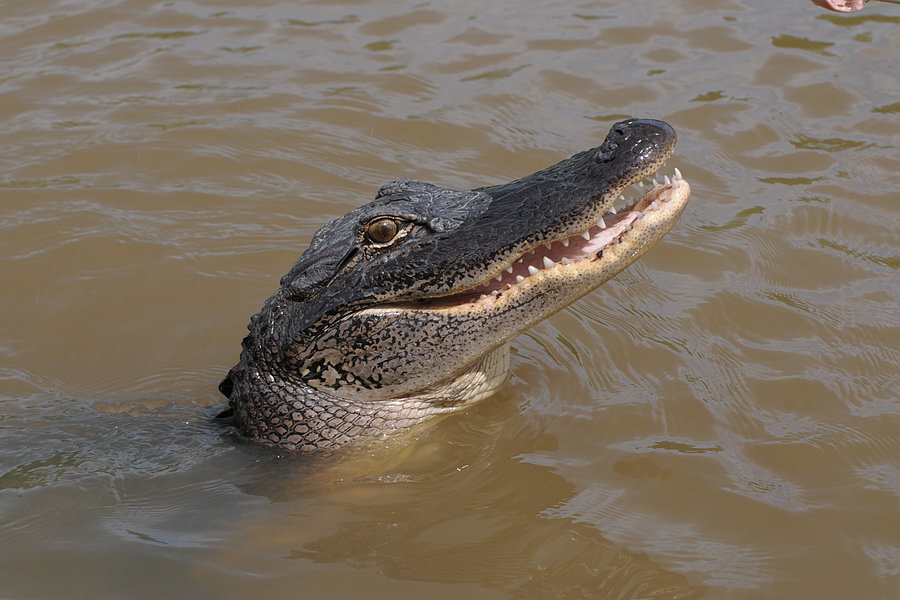
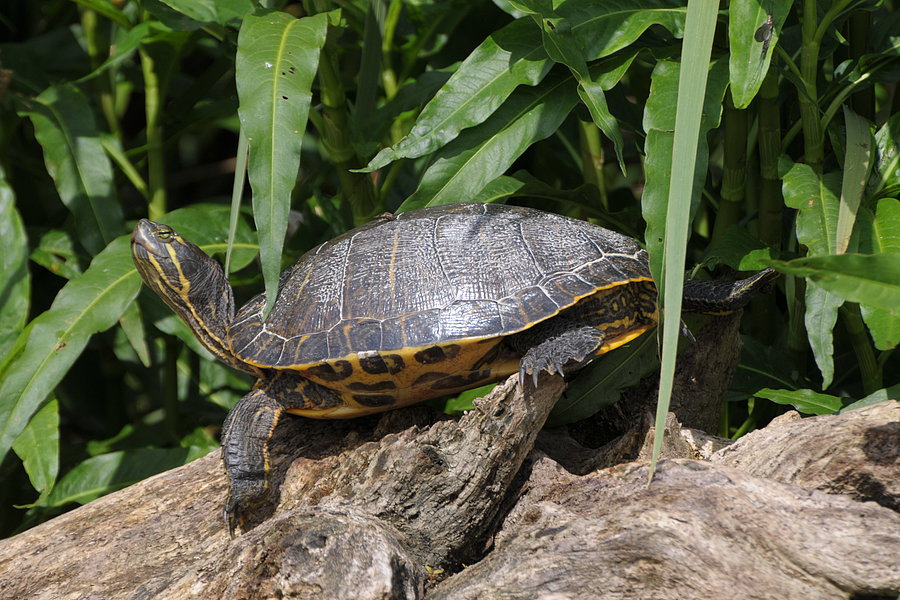
It was quite an experience to watch alligators leap out of the water in an effort to grab a hotdog off a stick the tour guide wielded. While the guides were keen on showing us the extent of how agile the gators were both in and above the water, they took care to note that the gators they feed do not become dependent on the food from the tour groups.—Mark
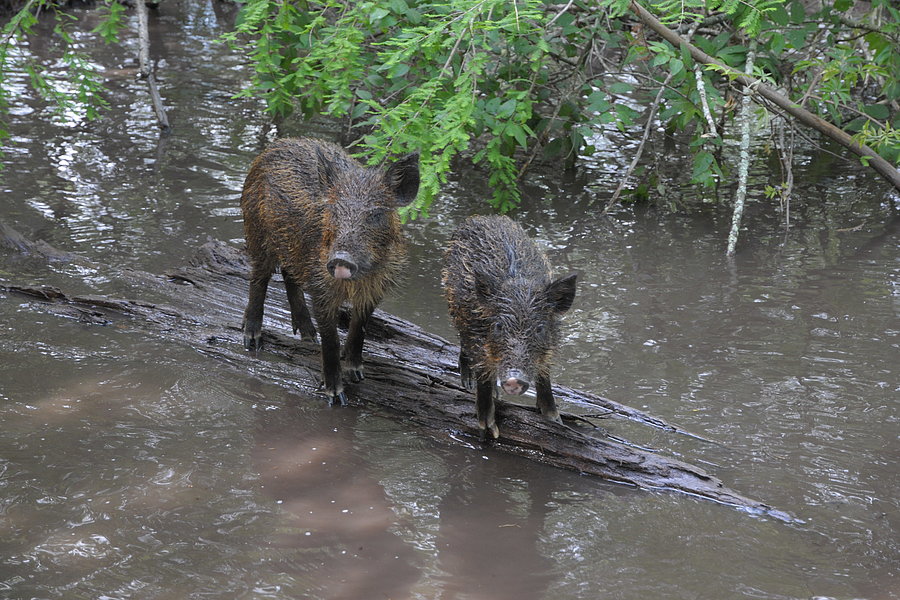
The way the two baby wild hogs were standing on the log, I couldn’t help but be reminded of Frank and Mark when they were little—Eric
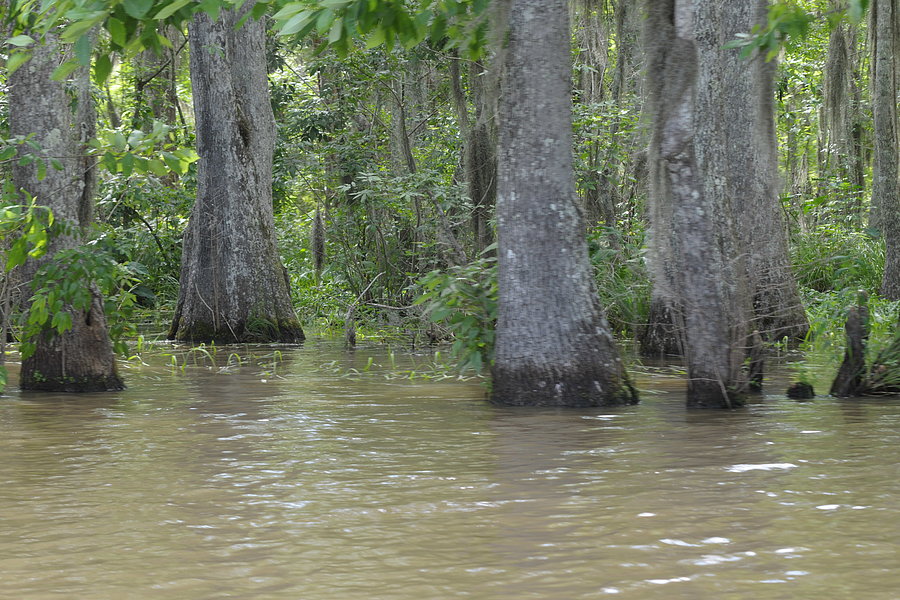
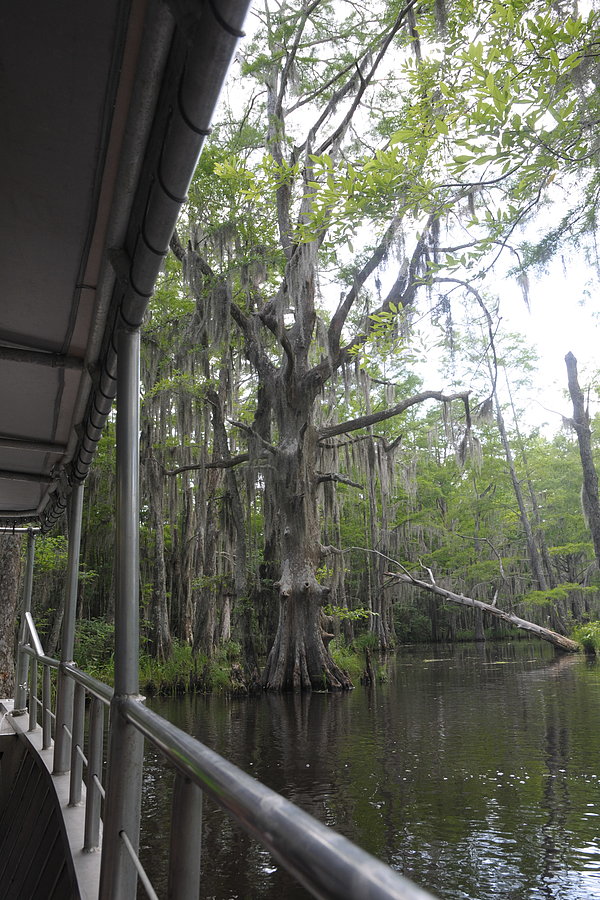
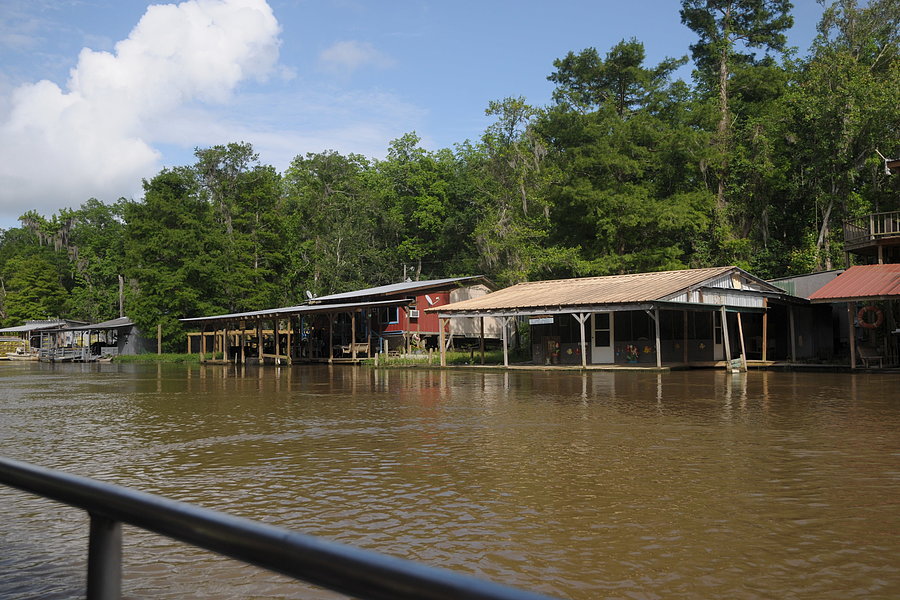
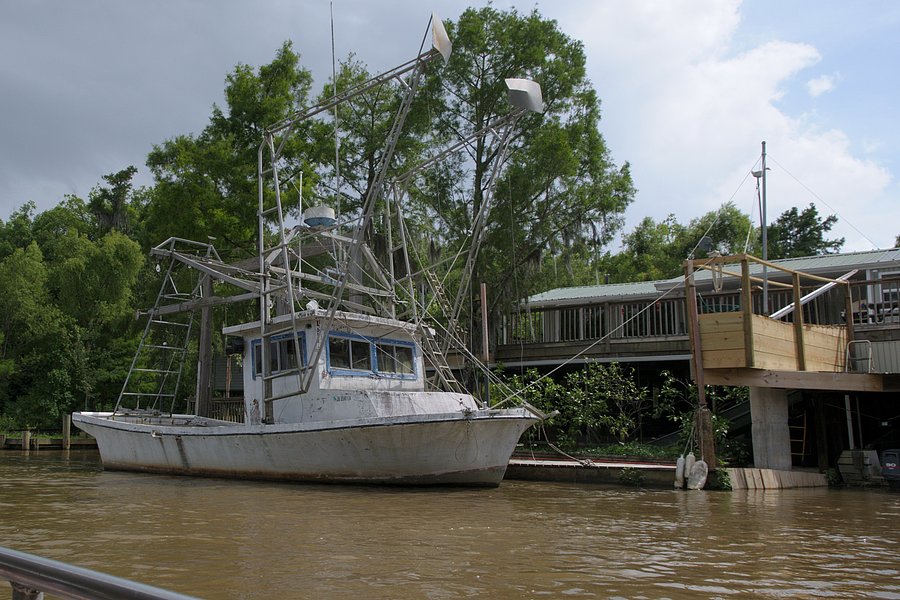
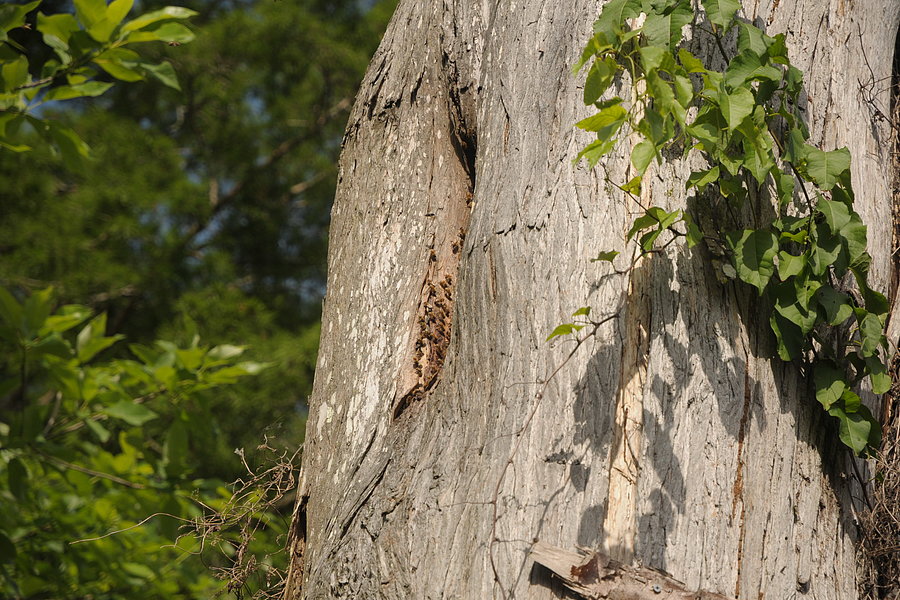
The tour takes us not only up and down the Old Pearl River but also into a real swamp area were there are wild hogs and gnarled trees. The tour guide also points out the house boats of the people living along the river, the fishing boats they have, and alerts us to a beehive in a tree right next to the visitor center.
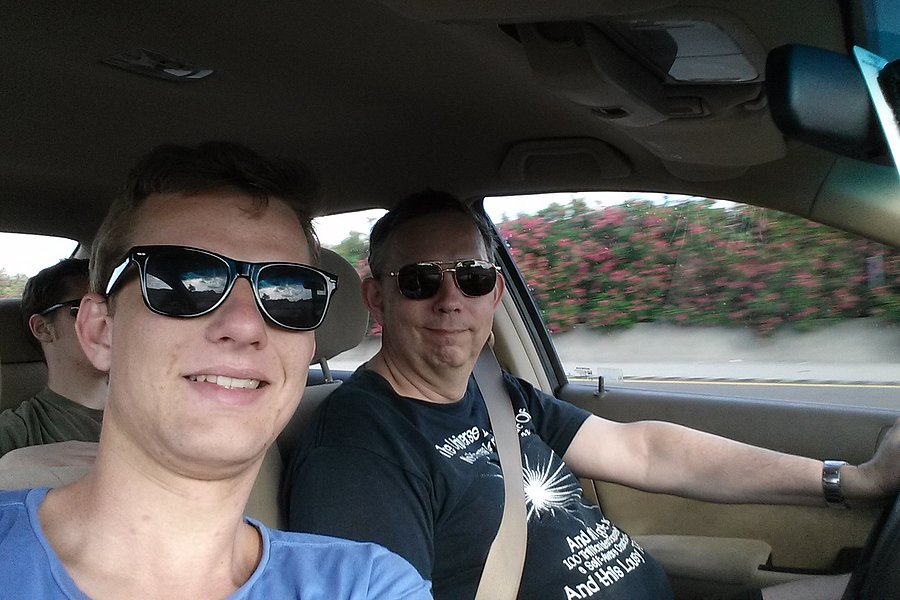
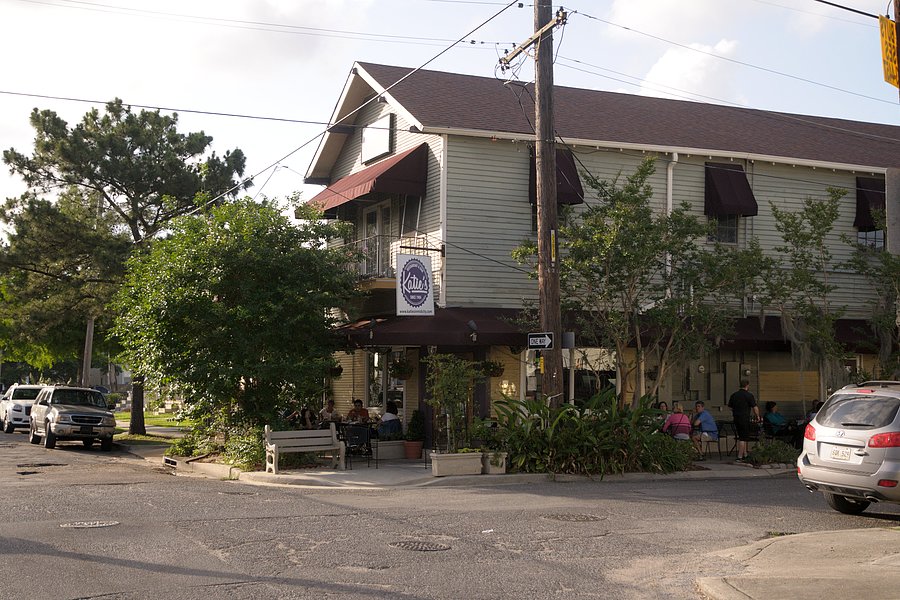
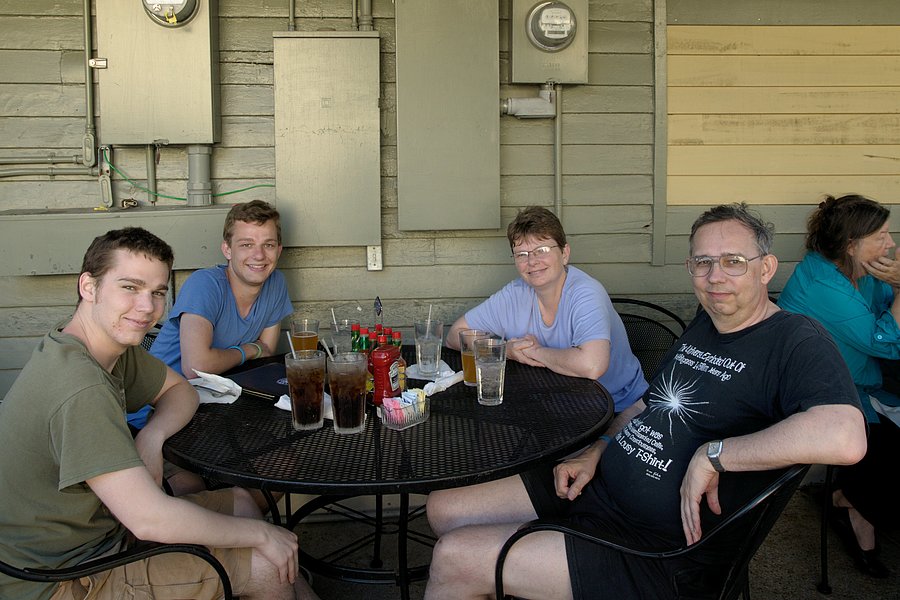
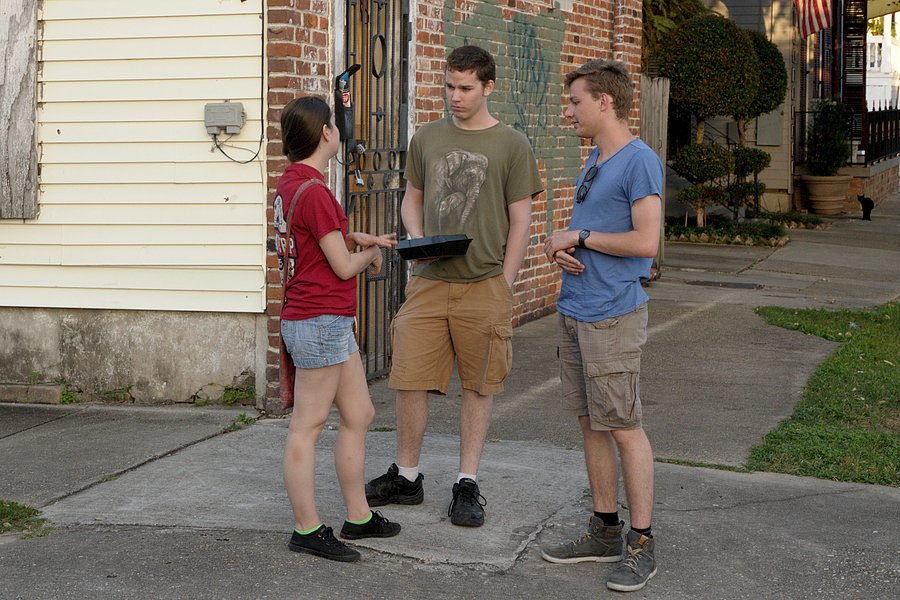
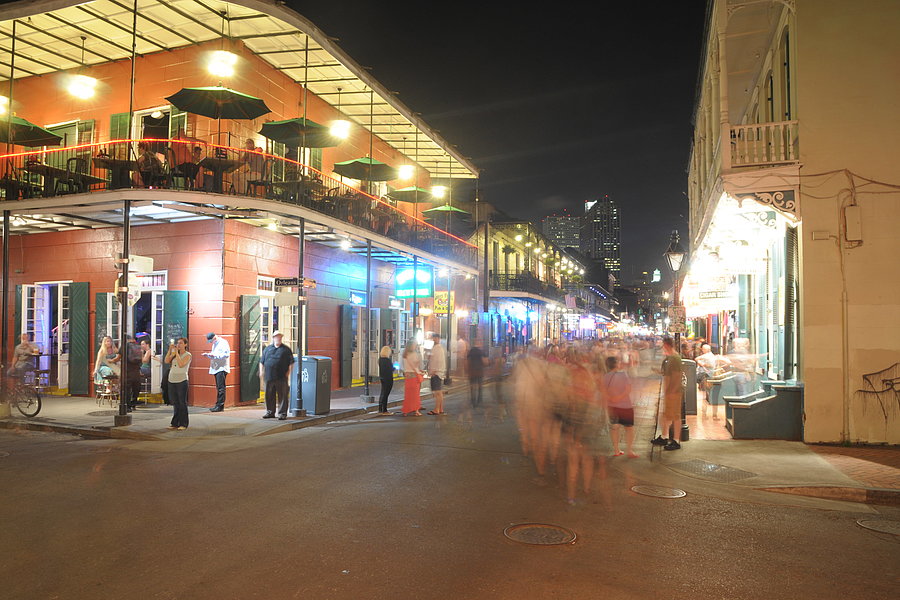
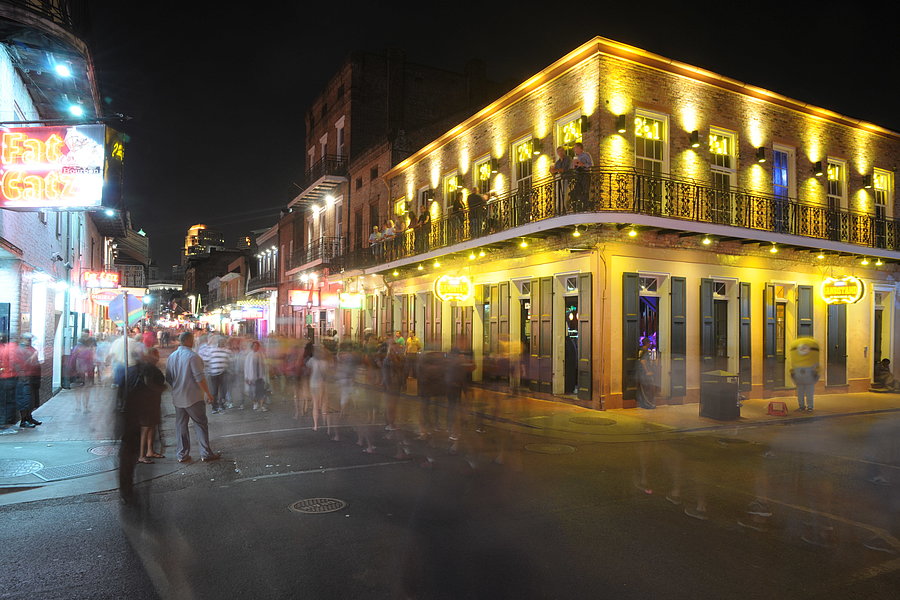
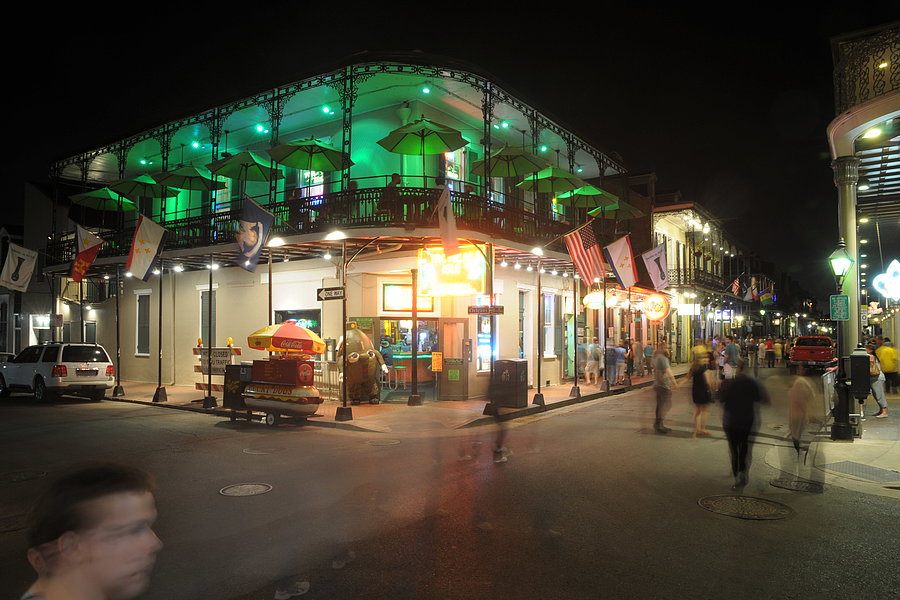
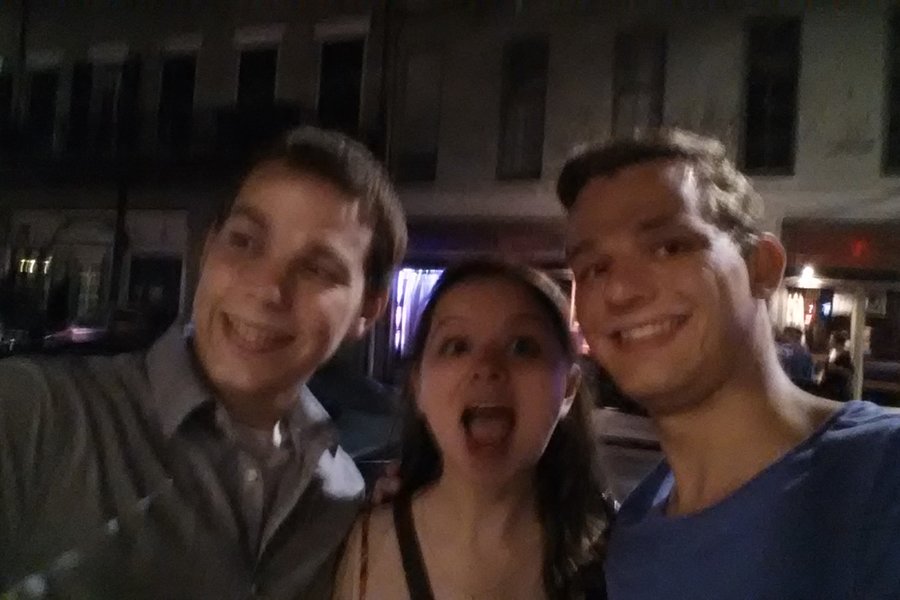
After the tour it’s already time for dinner at Katie’s Restaurant and Bar, (katiesinmidcity.com) which is in New Orleans’ Mid-City neighborhood. In the evening, Eric goes out to Bourbon Street to capture some of the bright night life. Later, Frank, Mark and Jenny go out again.
Pope Nicholas V gave permission for enslaving Africans, because they were, by and large, either animists (pagans) or muslims (devil worshipers). It was actually the Spanish who first brought slaves to the New World, and not the Dutch.—Nicoline